



 中
中
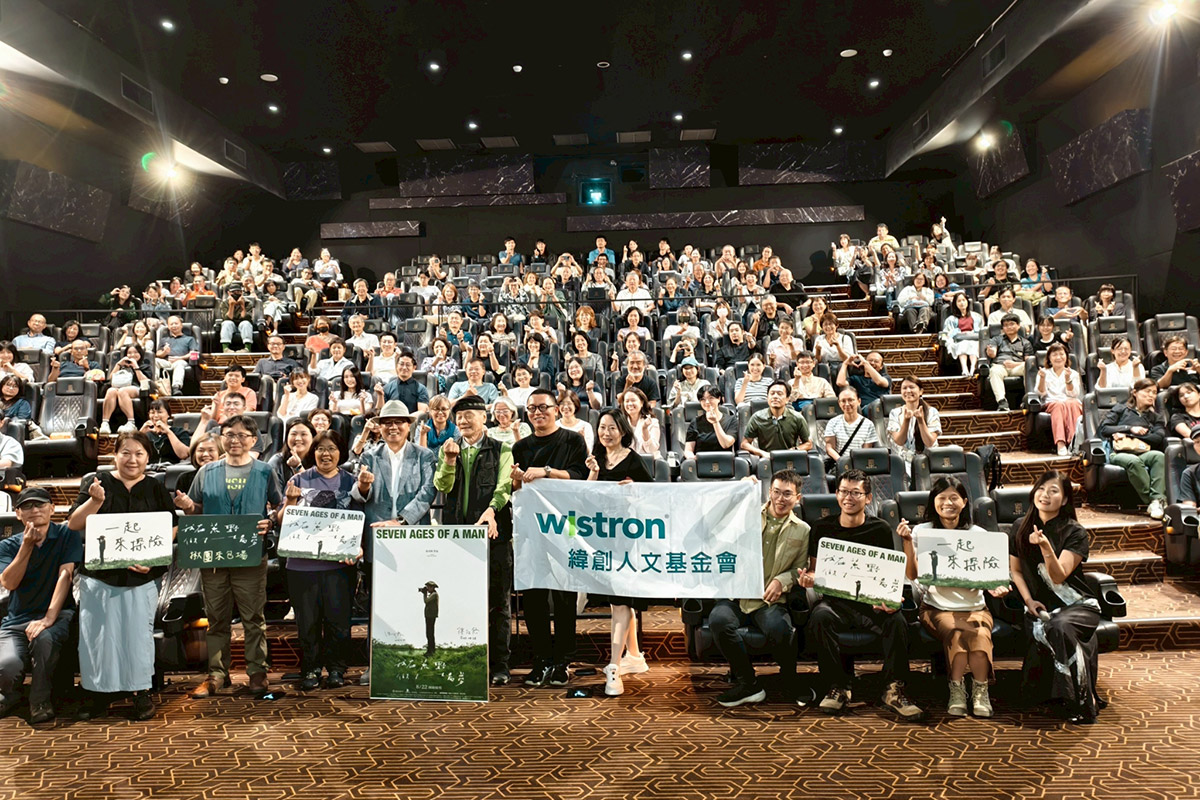
Exclusively sponsored by the Wistron Foundation and directed by Ko-shang Shen, the documentary Seven Ages of a Man chronicles the life and legendary expeditions of Jen-shiu Hsu, the renowned National Geographic Chinese Explorer. The filming spanned six years and covered 18,000 kilometers, capturing over 200 species across 500 hours of footage. Every frame serves as a testament to the patient waiting, the moments of being lost, and the delicate negotiations with nature.
On August 28, the Wistron Foundation hosted an exclusive VIP screening for its long-standing non-profit partners and Wistron Joyful volunteers. Attended by board members from both the Wistron Foundation and Wistron Corporation, the event was graced by the presence of Director Ko-shang Shen and Jen-hsiu Hsu, who shared intimate stories from their arduous filming journey. Their insights drew continuous applause and overwhelming acclaim from a deeply moved audience.

The documentary traverses the mountains and forests of Taiwan and the Amazon rainforest. Reflecting on the filming process, Director Shen shared how he transformed from a "detached observer" into a "fellow explorer." He recalled the moment he first set foot in the Amazon, stunned by the symphony of calls from countless species. Staring in awe, he remarked to Hsu, "So, this is how the Earth should be." At that instant, the concept of "insignificance" became a profound reality for him. He realized that humans are but a tiny species among many. Although gifted with intelligence, we have been entrusted with a more significant mission: to contemplate how we should truly live our lives.
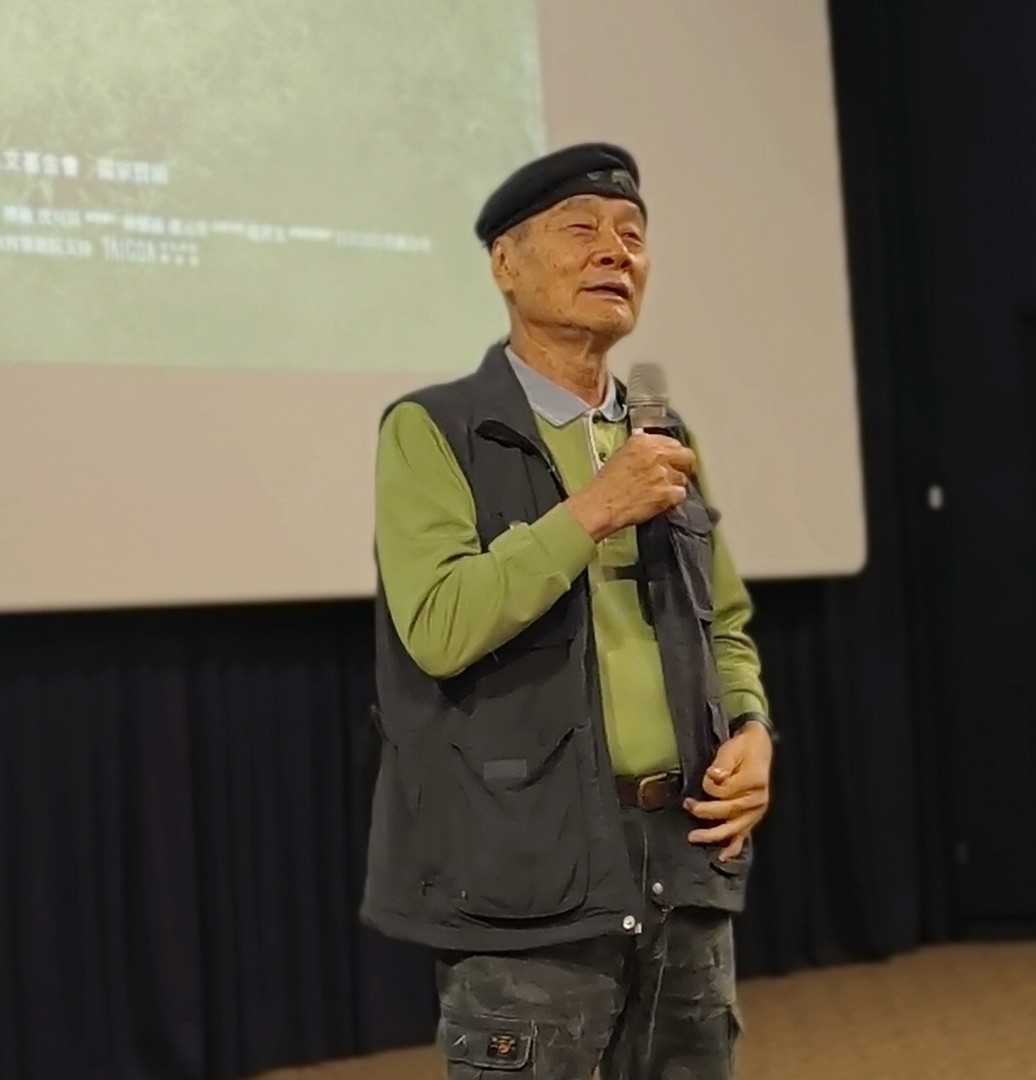
Reflecting on over 50 years of deep exploration into the rainforests, Jen-hsiu Hsu remarked, “I do not fear the passage of time; what I fear is having done nothing at all.” He also expressed his deep admiration for the Wistron Foundation’s long-standing dedication to environmental protection. He recalled their early collaborations with the Society of Wilderness to safeguard sites like Fuyang Eco Park and Shuanglianpi. Hsu noted that while the Chairman’s passion and generosity are boundless, the Foundation has remained remarkably low-profile despite its significant contributions to Taiwan's natural heritage.
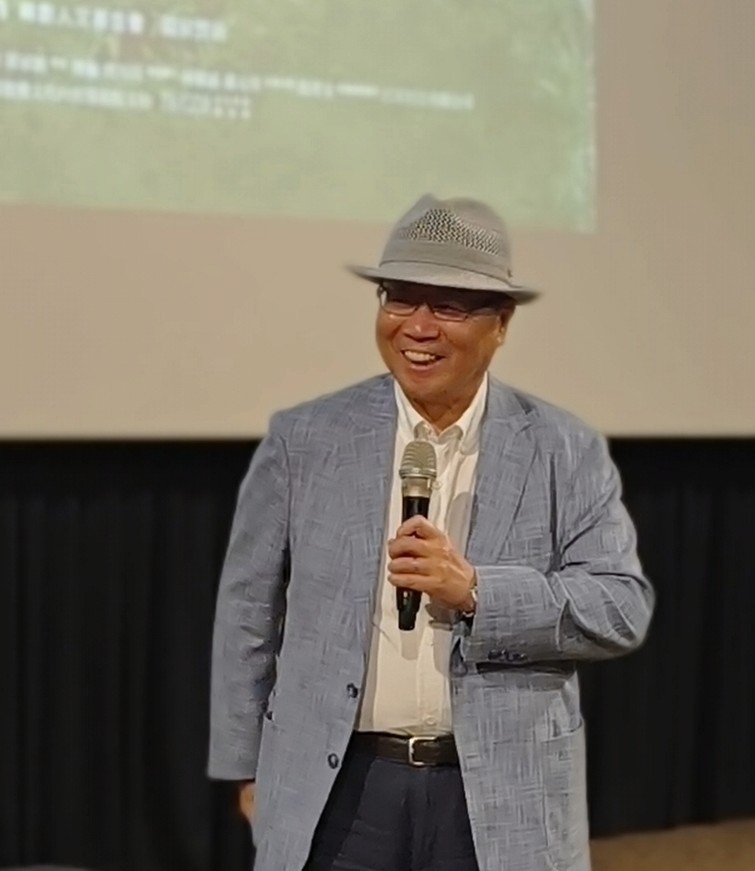
After the screening, Chairman Simon shared his profound reflections, offering high praise for the documentary. He remarked that Hsu’s life journey transcended personal significance, serving instead as a symbol of Taiwan’s soft power. Through Hsu’s lifelong devotion to the natural world, the Chairman noted, audiences can truly experience the depth and spirit of the Taiwanese people. He expressed his immense joy in seeing the completion of this film and conveyed his heartfelt admiration for Hsu’s dedication to preserving such precious works for Taiwan.
As the credits rolled, the theater was enveloped by a symphony of insects and birds echoing from every corner. This immersive soundscape was a deliberate choice by the director, intended to transport the audience back to his first night in the Amazon with Jen-hsiu Hsu. As the team stood spellbound by the myriad, ethereal calls of the wild—nature’s own celestial choir—the initial surge of emotion gave way to profound reflection. The wilderness is the very cradle of life, a realm where humanity holds the power to either nurture or devastate. How shall we choose? In the film, Hsu softly recites a poem he penned in 1987, offering a quiet yet definitive answer to that very question:
Don't Say Goodbye to Me, Taiwan(By Jen-hsiu Hsu) The sunset has long since faded, and twilight drapes the earth. The companions have departed, leaving only the rail’s desolate cry. I turn to bid the rosy clouds farewell, with little sorrow in my heart, For I know that tomorrow, the sun will rise again. The leaves have long since fallen, and the land lies in desolation. The changing of the seasons has stirred the hearts of many a poet. I turn to bid the season farewell, with little sorrow in my heart, For I know that next year, spring will return again. But oh, Formosa, bidding you farewell breaks my heart, For I know that your beautiful countenance, once gone, shall never return. The pollution of blue seas and azure skies, the ruin of mountains and rivers, You are no longer the treasure island upon which our ancestors first trod, Nor are you the Formosa whose beauty was famed across the world. Oh, Formosa, I am unwilling to say goodbye to you. Please, grant us a chance for atonement— Let the streams run clear once more; let the skies turn blue again.