



 中
中
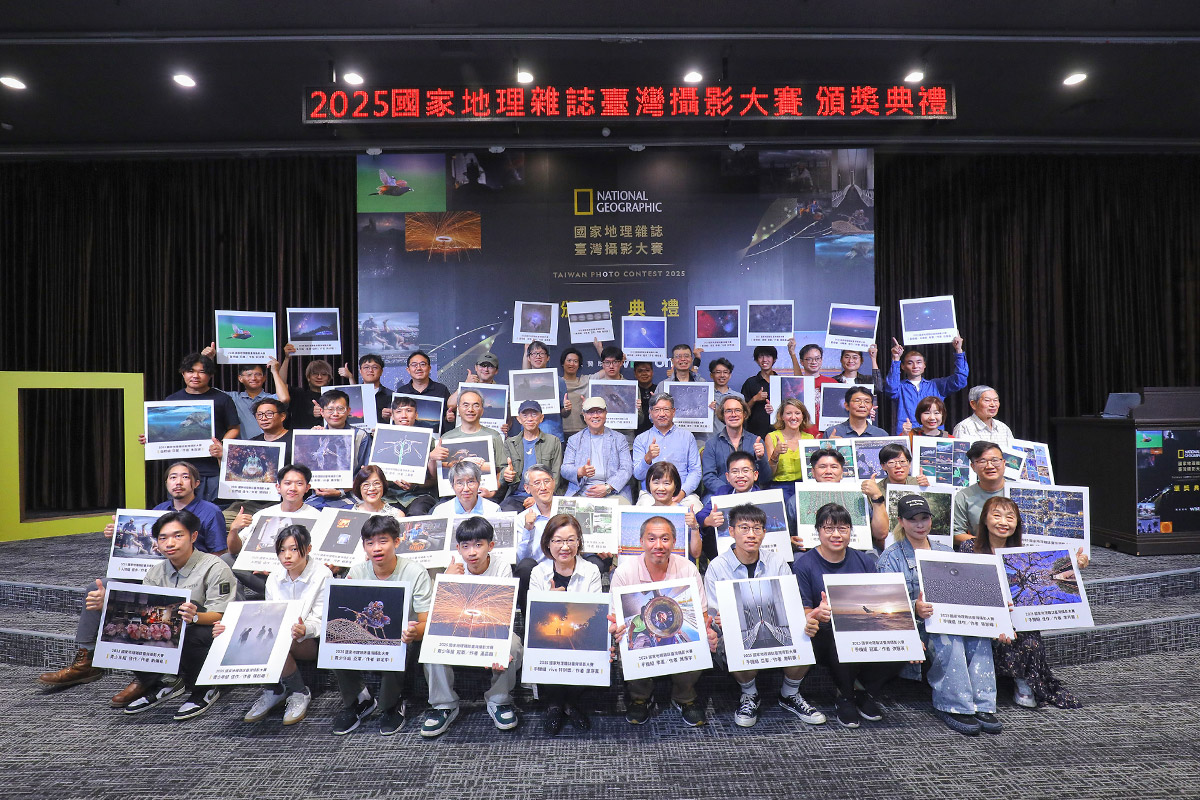
The National Geographic Taiwan Photo Contest 2025, organized by National Geographic and exclusively sponsored by the Wistron Foundation, attracted 6,097 photography enthusiasts and a record-breaking 16,060 entries—representing a nearly 1.6-fold increase over last year. The awards ceremony was held today (Sept. 27) at the GIS NTU Convention Center. Yung-shih Lee, Editor-in-Chief of National Geographic (Traditional Chinese edition), Simon Lin, Chairman of Wistron Corporation, and National Geographic photographer Christian Ziegler were in attendance to present awards to the 56 winners.
Editor-in-Chief Yung-shih Lee noted: “This year, we didn't just break records in quantity; the quality of the imagery was truly exceptional. The 'People' category was both authentic and creative, while 'Places' conveyed deep environmental reflection and a profound connection to the land. The 'Nature' category captured rare, fleeting wildlife moments, and 'Night Sky' showcased sophisticated astronomical images that balanced high technical difficulty with a natural aesthetic. The award-winning works in the 'Young People' category were every bit as impressive as the adult entries, while the 'Mobile' category fully demonstrated the agility and spontaneity inherent in the medium. Lastly, the 'Ecology and Environment' category revealed the deep dedication and long-term commitment of the photographers. Congratulations to all the winners; we look forward to seeing even more outstanding work in the years to come.”
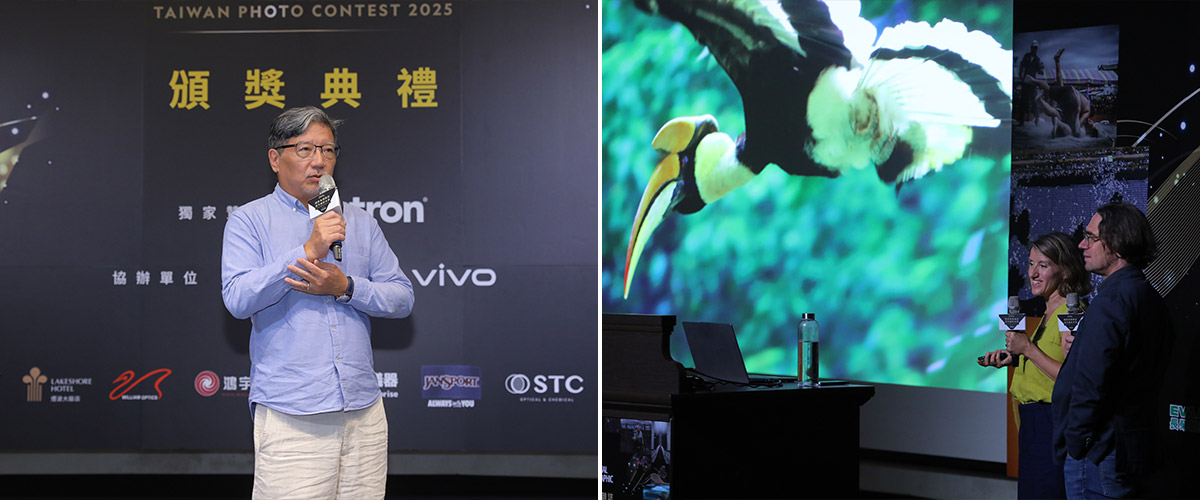
(Left) Yung-shih Lee, Editor-in-Chief of National Geographic (Traditional Chinese Edition): “Harnessing the power of imagery to awaken environmental awareness.”; (Right) National Geographic photographer Christian Ziegler visits Taiwan to present awards and delivers a lecture alongside his wife, tropical ecologist Dr. Daisy Dent.
Simon Lin, Chairman of Wistron Corporation, stated, “The impact of environmental destruction is a burden we all share—from river pollution affecting our water sources to deforestation causing landslides. Wistron has supported this contest for many years because we hope these images prompt deeper reflection on the importance of our environment. It is not just about climate change; it is about our daily lives. We hope these images spark public concern for our environment and ecology.”
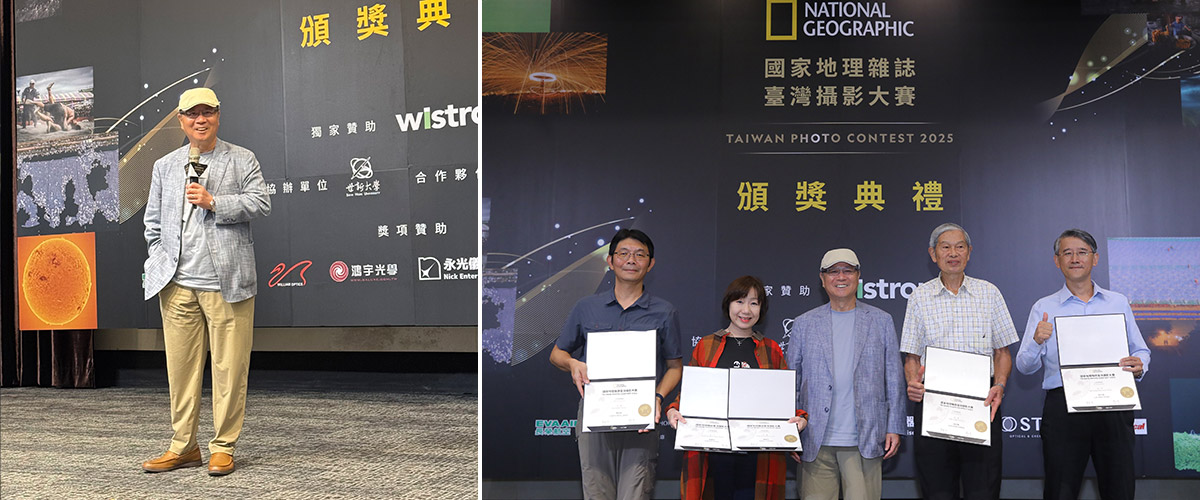
(Left) Wistron Corporation Chairman Simon Lin attended the ceremony to support the competition and present the awards for the "Ecology and Environment" category.
Seven Categories Showcase the Diverse Visual Landscape of Taiwan: Ecological Conservation and Local Community Care Take Center Stage
In addition to the original categories—People, Places, Nature, and Young People—the contest included the Ecology and Environment category (introduced in 2022 in partnership with the Wistron Foundation), the Night Sky category (added last year), and a newly reintroduced Mobile category. The Mobile and Young People categories were the standout highlights of this year.
As mobile photography becomes increasingly ubiquitous, National Geographic aims to inspire the public to tell their stories through everyday lenses, using imagery as a way to rediscover Taiwan and its ecosystems. This year, the Mobile category not only significantly boosted total submissions but also introduced a wealth of fresh perspectives, proving that the future of visual creation in Taiwan is full of infinite possibilities. Meanwhile, in the Young People category, 11-year-old Pan-Hsi Chen became the youngest winner in the contest's history, while Ding-Zhong Guo secured the runner-up spot for the third consecutive year.
In addition, this year’s competition saw entries across all categories demonstrating a high level of concern for environmental and ecological issues. Mien-shou Chen, the winner of the Places category, captured a powerful image of solar panels in Sinwen, Chiayi, that were overturned by Typhoon Danas. This striking visual highlights the challenges that extreme weather poses to renewable energy infrastructure and left a lasting impression on the judges. Renowned environmental documentary director Chin-yuan Ke praised the overall quality of this year's entries, noting that works combining unique perspectives with ecological themes are particularly compelling. “The works express unique perspectives and combine the wonders of natural ecology with environmental subjects, making them even more powerful for the viewers,” he said. He added that he expects to see even more excellent works in the future.
To further bridge photography with environmental education, the 'Ecology and Environment Reporting Mission' program will be expanded. Under the guidance of director Chin-yuan Ke, the top three winners from the Ecology and Environment and Young People categories will visit conservation habitats in mid-October. This on-site documentation program aims to foster a deeper sense of conservation awareness among the younger generation.
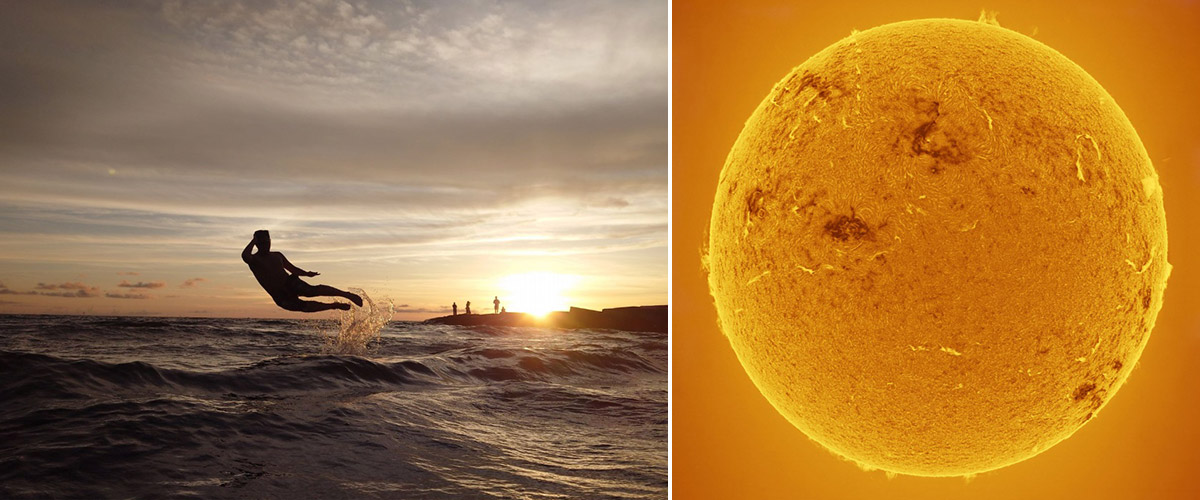
Award-winning works from this year's Mobile and Night Sky (Solar System) categories.
Mobile Category Makes a Strong Return; Night Sky Category Reaches International Standards
After a several-year hiatus, the Mobile category returned in collaboration with vivo, which established the “vivo Special Award” to encourage mobile photographers to participate in the contest. The creative quality of the mobile entries proved to be on par with those taken with professional cameras, demonstrating that visual storytelling is becoming more accessible and integrated into daily life. This also aligns with National Geographic’s ongoing commitment to fostering “younger generation participation” and “local community care”.
The Night Sky category, introduced last year, attracted an even greater number of exceptional entries this year. Among the participants were several returning winners from the previous year—Chih-Yi Chang, Po-Liang Cheng, and Shun-jia Yang—who further distinguished themselves by securing the third-place, first-place, and runner-up spots, respectively. One of the judges, renowned Hong Kong astrophotographer Vincent Cheng (also known as 'Fudo Myo-o'), noted that the high caliber of this year's entries significantly challenged the judging panel's decision-making. Contestants delivered stunning results, featuring spectacular Milky Ways, dreamlike nebulae, and captivating galaxies. These breathtaking techniques showcased Taiwan’s formidable strength in deep-sky photography. Wang Wei-Hao, a research fellow at the Institute of Astronomy and Astrophysics, Academia Sinica, further observed that several works have reached a world-class standard, highlighting the burgeoning creative energy within Taiwan’s astrophotography community.
Cross-Disciplinary Photography Forum Broadens Horizons; Renowned Foreign Photographer Observes Salamander Restoration Firsthand
A special highlight this year is the invitation of Christian Ziegler as a judge and keynote speaker. On September 28 and 29, he is scheduled to visit Yushan National Park and the Alishan National Forest Recreation Area to observe the Alishan Salamander Conservation Research Project. Led by Professor Yu-Ten Ju of National Taiwan University, this project has been active since 2023. This visit aims to showcase Taiwan’s unique biodiversity and elevate its natural beauty to the international stage.
Editor-in-Chief Yung-shih Lee stated: “National Geographic will continue to host this photography contest to inspire further exploration and discovery. Our goal is to consistently gather high-quality works that embrace diverse perspectives, fostering social awareness for sustainability and ecological conservation.”
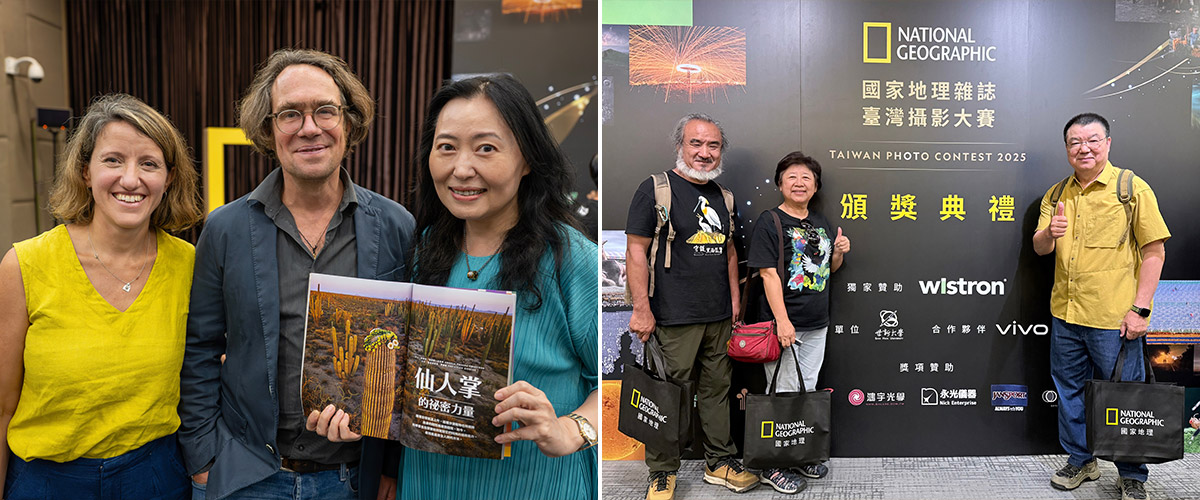
"(Left) Christian Ziegler signs a copy of his National Geographic feature for Wistron Foundation CEO Joyce Chou, expressing his appreciation for the invitation." ; (Right) Public welfare partners, including Director Chieh-Te Liang, Wei-Wei Hsu (Supervisor of the Wild Bird Society of Taipei), and Anson Liao (Executive Director of the Wild Bird Society of Taipei and Superintendent of Zhishan Cultural and Ecological Garden), also attended
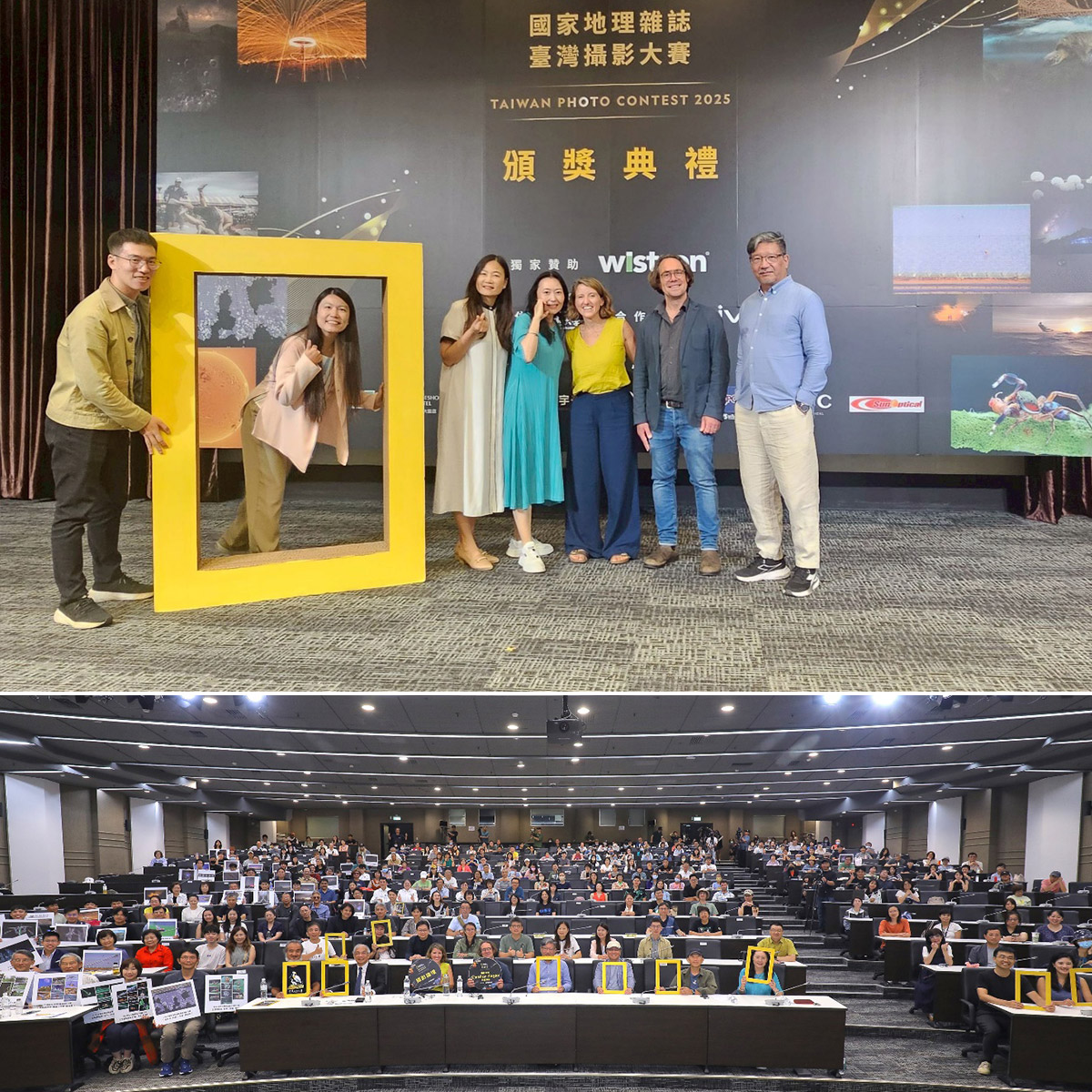
National Geographic Taiwan Photo Contest 2025
Complete List of Winning Works