



 中
中
By Die-hua Tsai (Seceretary General of Taiwan Raptor Research Group)
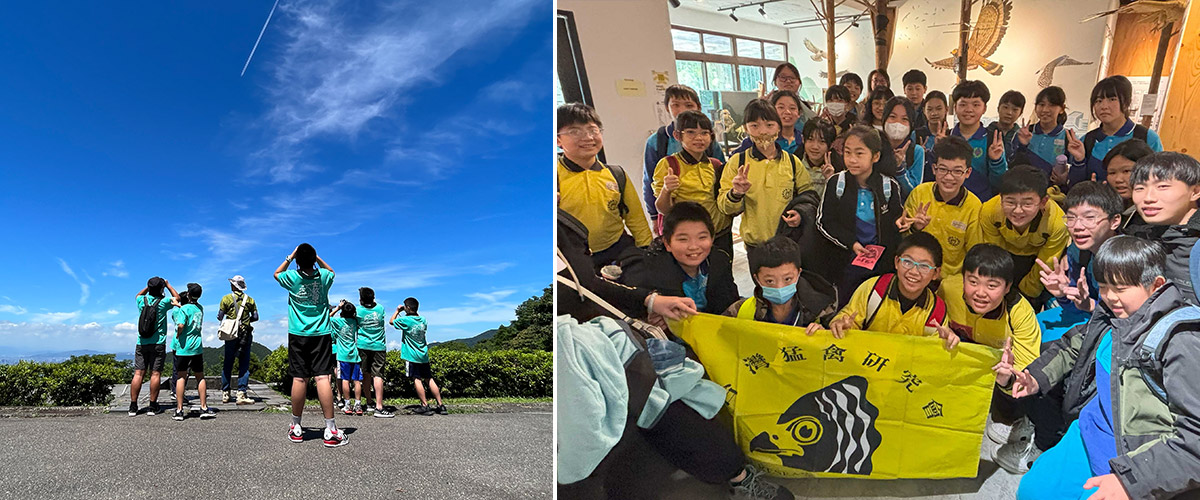
"Oh, white clouds in the sky—" In the documentary Fly, Kite Fly, Lim Giong's evocative, magnetic voice and the perspective of Teacher Shen Chen-chung call upon us to gaze skyward. Raptors—eagles and owls among them—are constant companions in our environment. Preoccupied with the trivialities of daily life, it's natural that we often fail to acknowledge their existence. The film Fly, Kite Fly recounts how the Black Kite population suffered a perilous decline to endangered status in Taiwan, largely due to the pervasive use of agricultural pesticides and rodenticides. While addressing the current crisis is important, the greater goal is to prevent such ecological disasters from ever happening again.
The Wistron Foundation provides long-term support to the Raptor Research Group of Taiwan (RRGT). Since its launch in 2022, the "Grass Mountain Soaring Eagle Project" has engaged 513 teachers and students from 18 elementary schools. The project combines outdoor raptor-watching sessions with indoor lessons to appreciate the beauty of the eagles of Grass Mountain, learn about raptor ecology, understand the survival crisis facing these birds, and contemplate how humans can coexist with nature. By introducing children to raptors early and allowing them to immerse themselves in the natural environment, the project aims to cultivate future talent for raptor conservation. It is hoped that teachers and students will continue to observe and care for the eagles in their school environments even after returning to their campuses.
Grass Mountain Soaring Eagle Project: Recognizing Our Responsibility to the Sky Through Binoculars
"Do you know how we can see an eagle?" asked the Secretary-General of the RRGT.
"In the mountains!" the children eagerly answered.
If even the children who live in the mountains have never seen an eagle, the situation is truly serious. In Taiwan, where land is precious and expensive, mountain development is happening faster than we imagine. In the past, forests were converted into orchards and betel nut plantations, and now, the emerging camping industry is directly impacting the homes of most raptors.
The Grass Mountain Soaring Eagles Project is dedicated to nurturing children's perception and ecological awareness. A raptor seen directly in its natural environment leaves a far deeper impression than any textbook knowledge. Bridging the gap between children and these magnificent birds is the core specialty of the Raptor Research Group of Taiwan. With binoculars in hand, children scan the sky for that tiny black speck, their excitement erupting as they shout, "I found it! I found it!" In that moment, they forge a unique, ineffable connection with the eagles. The curriculum also includes a visit to a secret space inside the Jingshan Nature Center, where the remains of wild animals from Yangmingshan National Park are preserved: a collared scops owl killed in a traffic accident, a pale thrush that struck a window, and a besra sparrowhawk chick felled by a typhoon. Each specimen carries a poignant story of rescue, injury, and loss. Volunteers from the Park Headquarters explain the specimens' characteristics, their causes of death, and the park’s conservation strategies. This intimate session serves two purposes: it allows students to examine the fine anatomical details impossible to see when raptors are soaring overhead, and it helps them understand the melancholy that accompanies the loss of wild creatures.
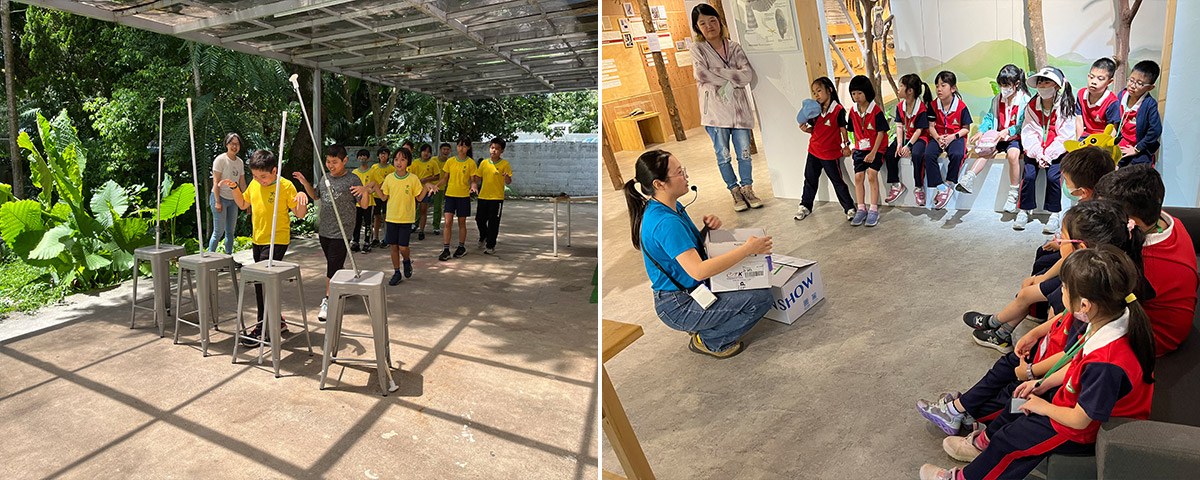
Left: Bird-friendly glass interactive experience / Right: Bird rescue procedure demonstration
From Window-Sticker Games to Pellet Lessons: How Children Learn to Become Guardians of Raptors
In the morning, children explored the themes of life and death in wildlife; in the afternoon, the focus shifted to understanding animals and learning how to protect their lives. At the Raptor Rescue Station, about 220 cases are handled each year, with roughly 20 percent resulting from window collisions. To address this, we designed an interactive game that allows students to experience firsthand the 5×10-centimeter rule used in bird-friendly window layouts. By understanding this principle, exploring various ways to apply it, and participating in a demonstration of raptor rescue procedures, students return to their campuses ready to serve as ambassadors for saving schoolyard birds.
Just as humans face food safety issues, birds also confront a food safety crisis. Rodenticides and heavy metals pose long-term threats to the health of Taiwan’s raptor populations. To monitor raptors’ movements and diets more effectively, researchers collect pellets and examine the remains inside to determine what the birds have been eating. This inspired us to design the "Pellet Lesson," where children dissect owl pellets from the rescue station and learn to identify the owl’s diet. To prevent bacterial contamination, each pellet is wrapped in aluminum foil and sterilized in a high-temperature, high-pressure autoclave. Opening the foil is like unwrapping an Ichiban Kuji ("Top Prize" in Japanese): a "D prize" might be a frog’s leg bone, a "C prize" a mouse femur, a "B prize" a mouse skull—and the instructors’ favorite, the dreamlike "A prize," is a cockroach exoskeleton. Yes, even collared scops owls prey on arthropods! In urban areas, cockroaches are the most common and abundant insects, and the improper use of pesticides and other chemicals can affect raptor health. While students may feel reluctant when handling cockroach fragments, they gain an understanding of the crucial role that these lower-level organisms play for top predators.
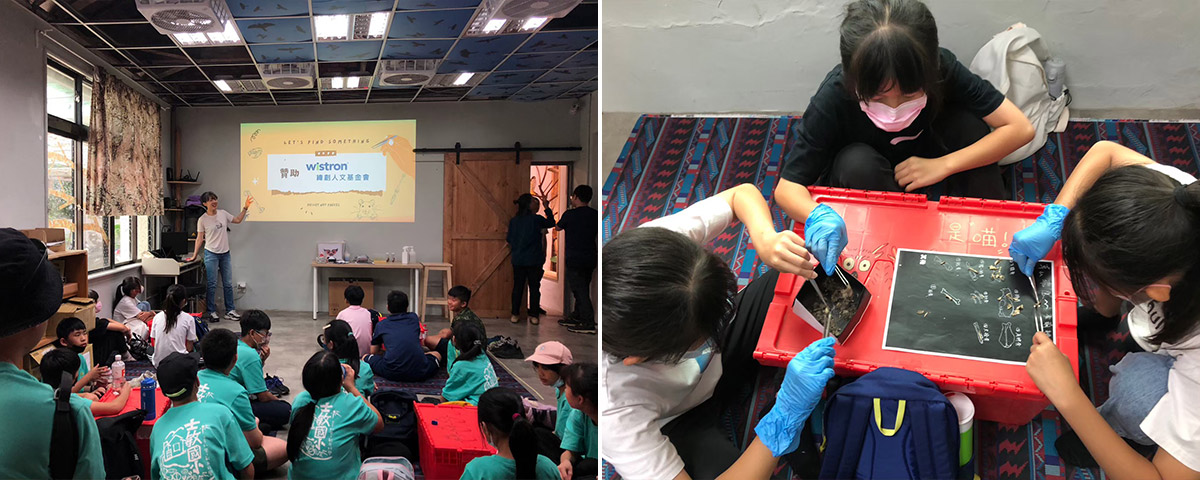
Left: Pellet Handling Orientation / Right: Children dissect the pellets themselves
Sowing the Seeds of Future Guardians Along the East Asian Migratory Route
Taiwan is an important stopover along the East Asian migratory route, and long-term monitoring of migratory raptors is essential to understanding whether their populations are under threat. "Sharp Eyes" is the indoor, educational version of the migratory raptor survey. Our organization has been commissioned by Kenting National Park to conduct annual surveys at Lingxiao Pavilion every September and October, recording the species and numbers of raptors in migration. This work has continued for 20 years, yet we still know very little about the status of migratory raptors, whereas in many countries abroad, such surveys have been conducted continuously for more than 50 years. Through group competitions, children learn to communicate across teams and develop collaboration skills while carefully counting the flowing "rivers" of hawk flocks. We witness their focus and persistence—and sometimes catch a glimpse of the next generation of raptor survey stars.
As the day draws to a close, a final tour of the exhibition and a group photo mark the farewell. The reluctant smiles of both teachers and students suggest that the seeds we have sown have truly taken root in their hearts.
Taiwan Raptor Research Group (Grass Mountain Raptor Center) Venue: No. 7, Jianye Road, Shilin District, Taipei City Opening Hours: Tuesday to Saturday, 11:00 –17:00
Related Links: