



 中
中
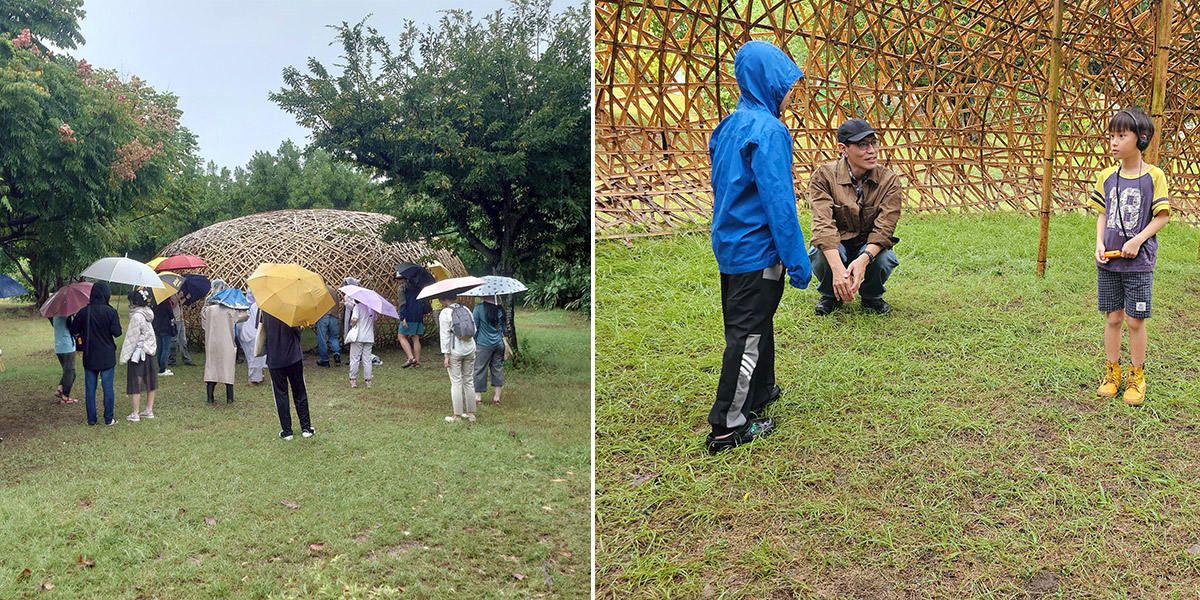
(Left) The Wistron colleagues admiring Breath by South Korean artist Bonggi Park. ; (Right) Wistron colleagues experiencing the space within the artwork.
Despite the torrential rain on October 19th, the passion of over thirty Wistron colleagues to connect with nature and art remained undampened. Since 2022, the Wistron Foundation has partnered with the Wild Bird Society of Taipei to safeguard Guandu Nature Park. This year marks the third consecutive year of the foundation’s sponsorship and active participation in the "Guandu International Nature Art Festival." In addition to a massive 6-meter installation co-created by Wistron colleagues, this year’s exhibition features seven remarkable works by five international artists from four different countries. These, alongside collaborations with Taipei National University of the Arts (TNUA) and GuanDu Junior High School, provide a diverse and rich artistic feast for the wetland.
Nature as Subject: Diverse Environmental Perspectives Through Art
Guided by curator Bo-Sen Liao, participants immersed themselves in the beauty of the wetlands while listening to the stories of how artists engage in a dialogue with nature. One colleague reflected, "Engaging with these artworks offered me a profound insight into how we should coexist and interact with the natural world." Hearing the story behind Floating Pulse—a special initiative commissioned by Wistron Foundation and co-created by artist Kuei-Chih Lee and 52 Wistron volunteers—unveiled a profound connection to the land and a fresh perspective on the environment for the group. Many expressed a heartfelt desire to personally contribute to the creative process in the future.
Artists from across the globe have expanded upon this year’s theme, "Nature as a Solution," from various unique angles. Stepping into Lithuanian artist Arvydas Ališanka’s work, Bulbul, one discovers more than just a structure of shelter; it serves as a powerful reminder that when we care for nature, nature responds by protecting us in return. Within the space of Guandu Triad, a bamboo and reed installation by American father-and-son duo Herb and Seven Parker, the scents, textures, and the rustling of fibers envelop the senses, making one feel truly embraced by the natural world. In South Korean artist Bonggi Park’s Breath, the dome-like structure symbolizes the rhythm of breath. As light and air flow through the piece, it invites visitors to reconnect with their own bodies and synchronize their heartbeat with the breath of the world. Along the park’s trails, Dutch artist Ieke Trinks’ Conserved Energies features inscribed bamboo slats that prompt reflection: as we consume and enjoy modern conveniences, how much energy do we extract from nature, and what do we give back? Located on the Crab-Watching Trail, the collaborative installation I, Mudskipper—created by TNUA and Guandu Junior High School—draws inspiration from the mudskipper’s unique resilience. By highlighting its ability to venture onto land while returning to the water, the piece encourages us to readapt and coexist with our changing climate. Finally, standing before the curator's commemorative work, Flow Together – Looking back of the 20th Anniversary of Guandu International Nature Art Festival, one witnesses the twenty-year trajectory where art and Guandu wetland intersected. It is a journey of repeated encounters, learning, friction, reconciliation, and renewal—a flowing river of nature and culture.
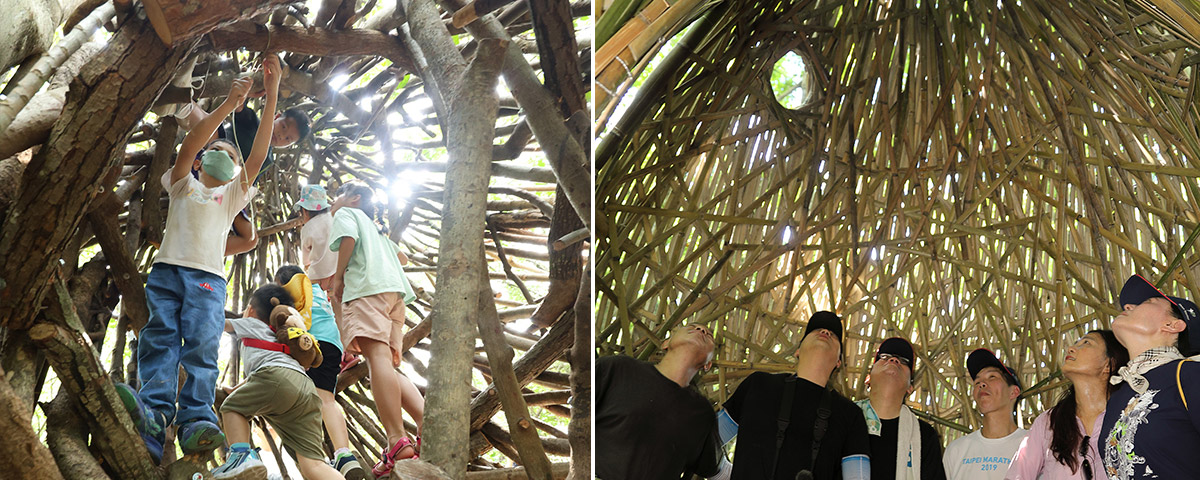
Left: Lithuanian artist Arvydas Ališanka’s work, Bulbul. Photography by Liang-Hsiu Du. ; Entering Floating Pulse by the Wistron colleagues provides a different kind of interactive experience with environmental art.
Wistron Colleagues Exploring the Relationship Between Humanity and Nature Through Artistic Actions
Po-Sen Liao, who has curated the festival for four consecutive years, shared: "The contribution of the Wistron colleagues achieved a significant breakthrough this year, as they co-created on-site with artists to showcase a deepening of aesthetics and reflection." He was deeply moved by the focused expressions, active inquiries, and sincere feedback from the participants during his guided tour. Liao noted that the Wistron culture—grounded and rational, yet infused with humanistic warmth—was particularly evident in their resilience during the heavy rain. "Huddled together in a bird-watching hut amidst the downpour, listening and exchanging feelings about art and nature—that moment was the most beautiful sight I witnessed while guiding the Wistron team," he recalled emotionally.
As the rain subsided, the whispering wind, the bird calls, and the tactile sensation of the mud underfoot served as a gentle reminder: "Nature is always here, waiting to be listened to anew—and art is the door that reopens our perception." The Guandu International Nature Art Festival is far more than an exhibition; it is a vital continuation of environmental education and action. The Foundation remains committed to bridging public welfare partners, the arts, and diverse resources, ensuring that conservation is not merely a concept, but a living practice and a legacy to be passed down.
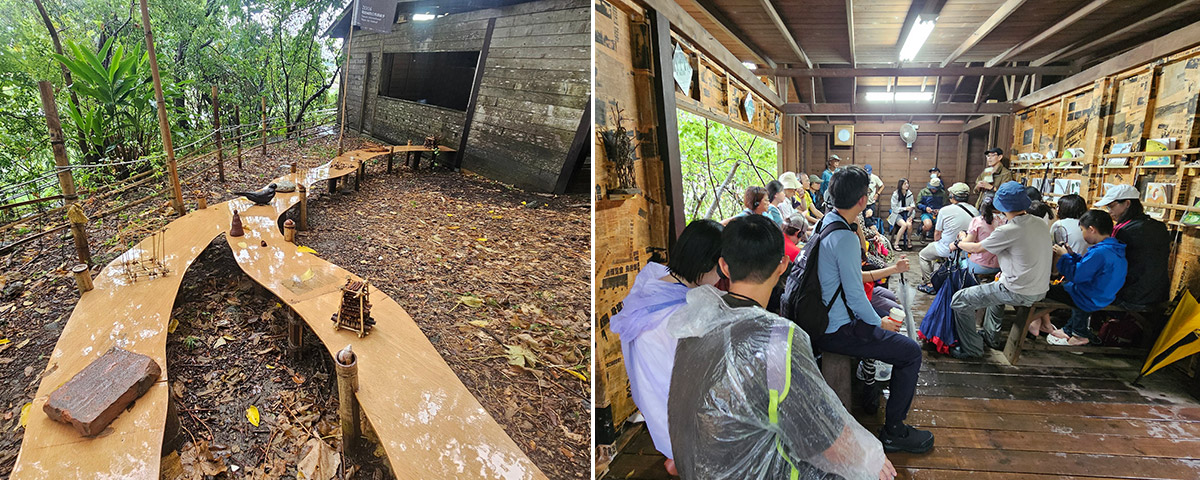
Curator Po-Sen Liao guiding visitors through his commemorative piece, Flow Together – Looking back of the 20th Anniversary of Guandu International Nature Art Festival