



 中
中
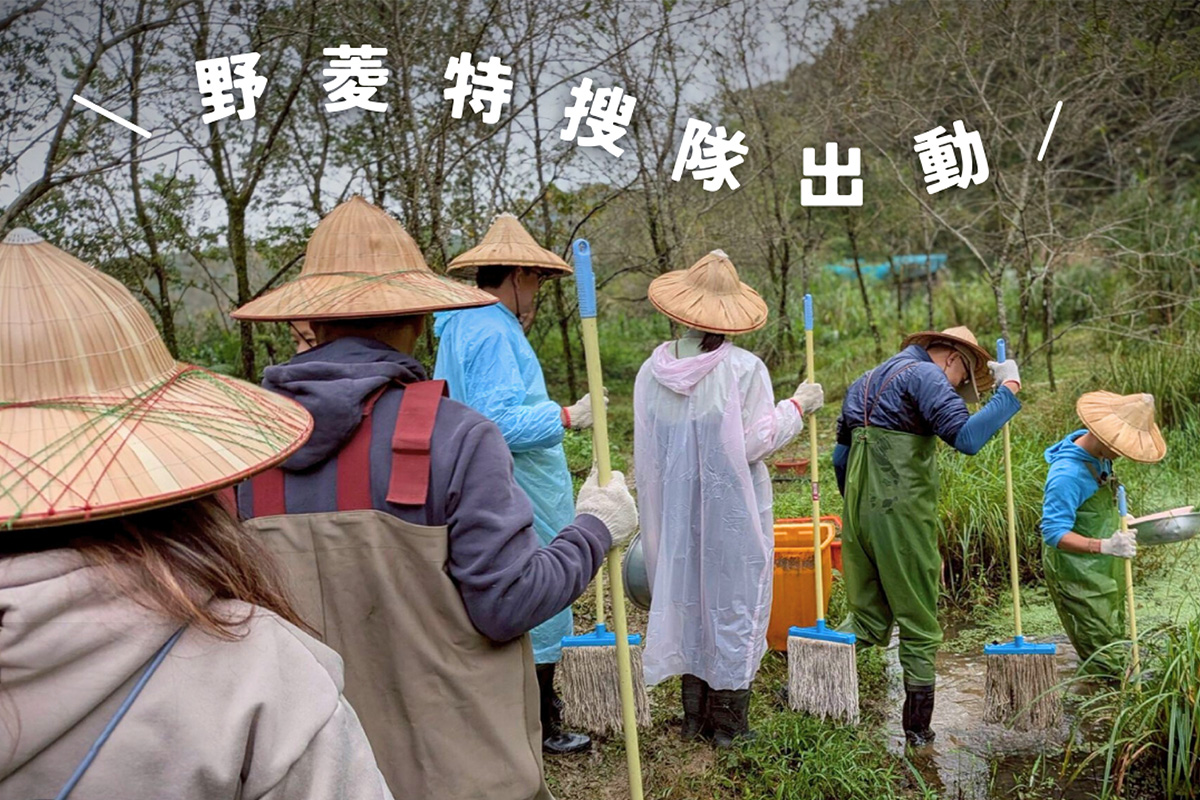
Equipped with waterproof waders, the Wistron Joyful Service volunteers prepare to wade into the water for wild water caltrop collection.
The wild water caltrop (Trapa incisa var. sieb.) is a floating-leaf plant native to Taiwan and is classified as an endangered species on the Red List of Threatened Species. In 2001, the Shuanglianpi wetland suffered severe man-made damage, pushing the wild population to the brink of extinction. Fortunately, through rescue efforts by The Society of Wilderness, the species' genetic stock was preserved. Today, its protection continues through the ongoing support of the Wistron Foundation.
During winter, wild water caltrops typically wither as temperatures drop, leaving behind dormant seeds to await germination the following spring. However, driven by extreme weather in recent years, temperatures now fluctuate abruptly. When temperatures spike, the seeds are "tricked" into sprouting prematurely. Once the cold returns, these early sprouts wither and die, resulting in a significant loss of viable seeds for restoration. To combat this, Wistron volunteers travel to Shuanglianpi every winter to form the "Wild Water Caltrop Task Force." Their mission is a critical seasonal habitat task: ensuring these seeds safely survive the winter.
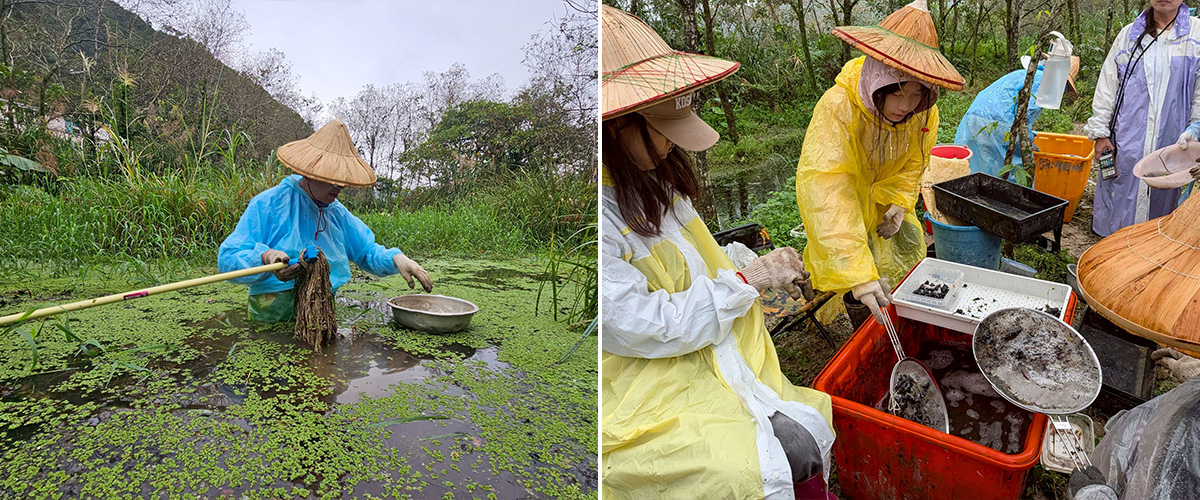
Wistron volunteers coordinate their efforts in a synchronized workflow: while some scoop the water caltrops from the nursery pond, others remain on the bank to treat them with tea seed meal and carefully sort them.
The Wild Water Caltrop Task Force Begins Its Search for Dormant Seeds
Once geared up, the volunteers divide the labor according to their assigned roles. Those tasked with the pond work don chest waders and drag long mops back and forth across the ponds. From a distance, it looks as though they are "mopping" the pond; in reality, they are harvesting dormant seeds nestled in the mud. Once retrieved, the seeds are sent to the "Tea Seed Meal Spa." Here, the natural saponins in the meal act as a gentle deterrent, prompting "hitchhiking" snails—including the invasive golden apple snail—to detach from the seeds safely.
The shore team transforms into a human assembly line. They sort the seeds by identifying the "sinkers" and "floaters," while others meticulously remove mop fibers snagged on the seeds' barbed spines. This is followed by a second round of cleaning and inspection to ensure every seed is prepared for the "Dormancy Station." Finally, the seeds are placed in refrigerator to maintain their dormancy until next spring, when they will be returned to the lake to begin a new growing season.After a morning of dedicated effort, the volunteers collected over 1,200 wild water caltrop seeds. The Wistron volunteers have long been committed to the restoration of Shuanglianpi, serving as silent guardians of the lake year after year. It is thanks to their perseverance that this wetland is slowly reclaiming its former splendor. We extend our heartfelt gratitude to every Wistron volunteer for their tireless work in protecting Shuanglianpi together.
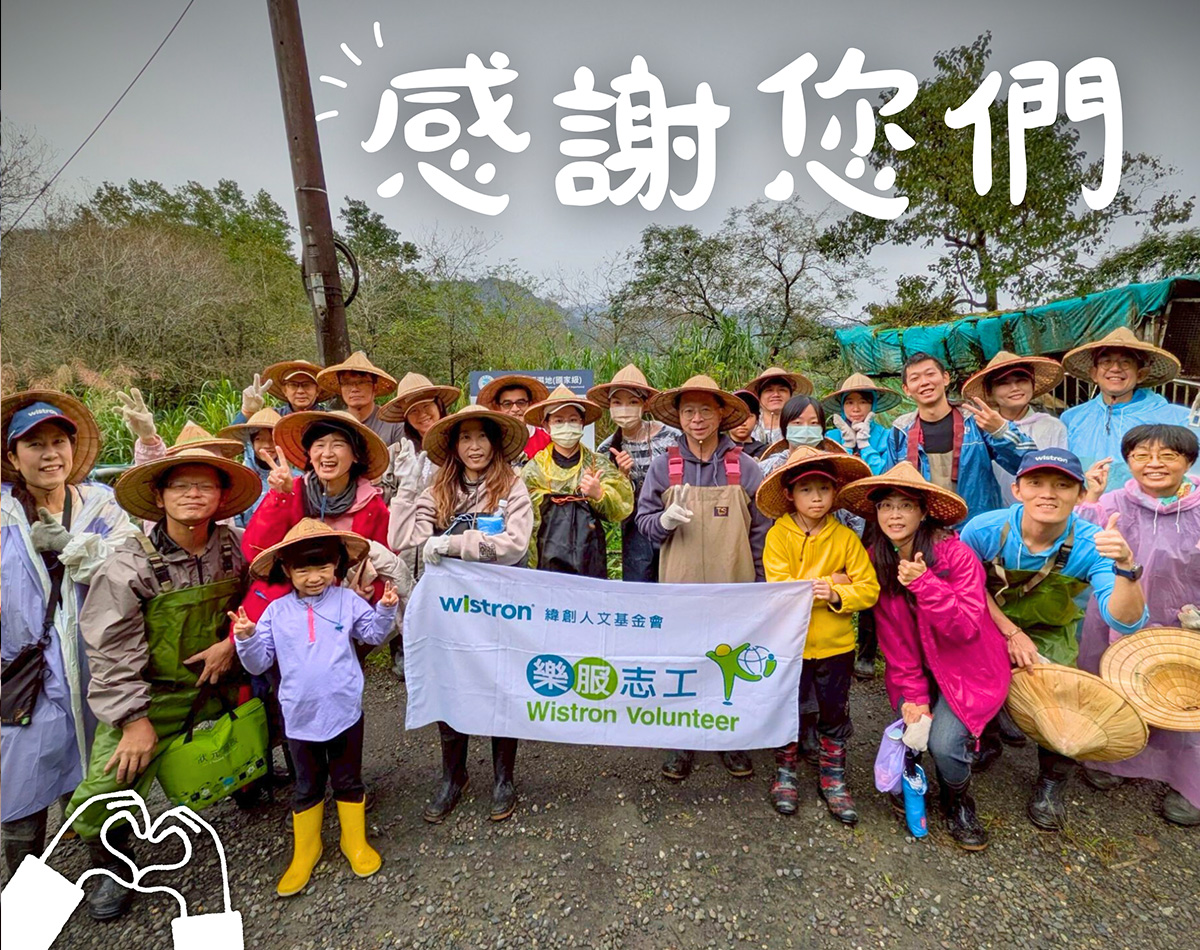
Group photo of volunteers at the Shuanglianpi Work Holiday on 11/22.