



 中
中
Awakening Awareness Through Imagery: From Competition to Field Reporting
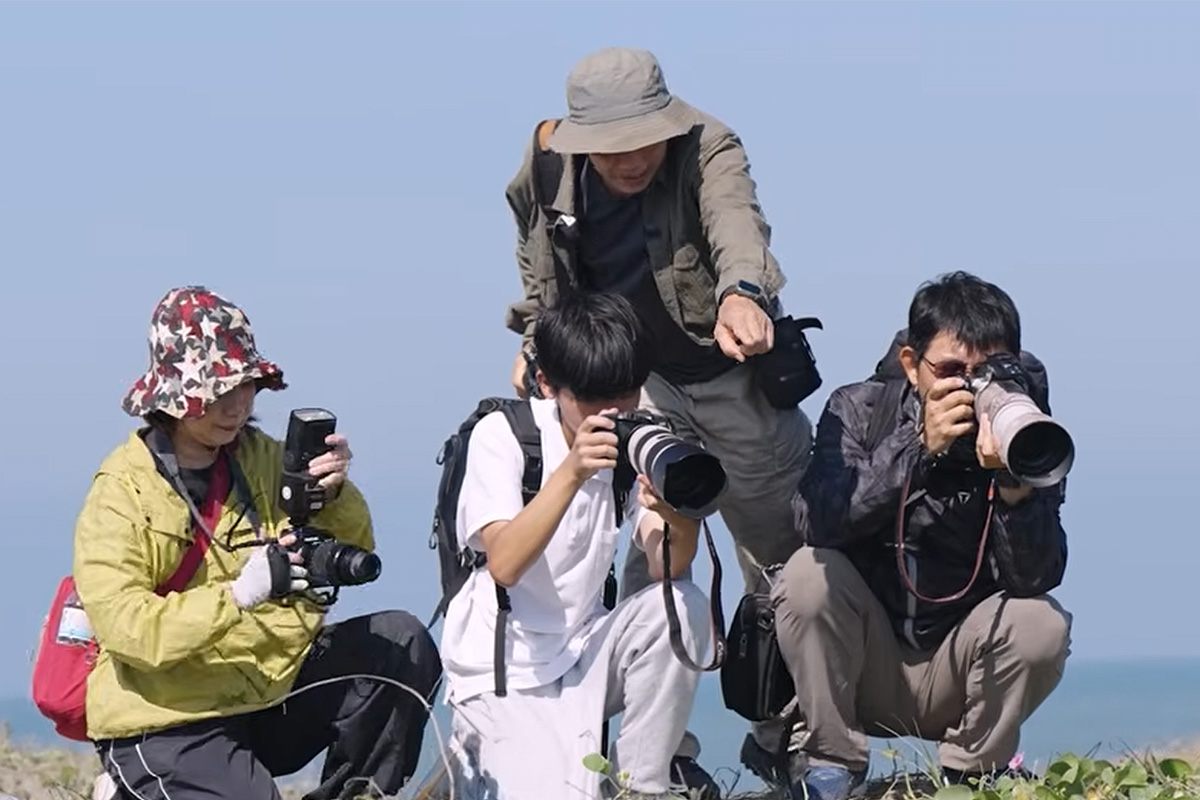
To ensure that images move beyond mere aesthetics, the Wistron Foundation and the National Geographic Taiwan Photo Contest established the "Eco-Environmental Reporting Mission." Led by environmental documentary director Chin-yuan Ke, the mission originally tasked only the winner of the Eco-Environmental Category with reporting assignments. Starting last year, the initiative was expanded to include the category's runner-up and the Youth Category winner, passing Director Ke's decades of accumulated observational experience down to a new generation of visual storytellers.
Over the past three years, the "Eco-Environmental Reporting Mission" has journeyed through the Shuanglianpi Wetland in Yilan, the Guandu Nature Park in Taipei, and the Longci Niupu Badlands, Tainan. This year, the mission turns its lens toward the vanishing westernmost point of Taiwan’s main island—the Qigu Lagoon in Tainan.
Learning on the Ground: Care and Responsibility Beyond Photography
Tainan's Qigu Lagoon is currently the largest and best-preserved lagoon wetland in Taiwan. With seawater as calm as a lake, it nurtures a unique bounty of fisheries and a rich cultural landscape. However, under the dual threat of climate change and extreme weather, the lagoon's barrier islands are vanishing. In the wake of the 2025 typhoons, breaches in the sandbars have widened significantly, triggering a profound landscape transformation that can no longer be ignored.
In the fields and intertidal zones of Qigu, Director Ke centered his teaching around the core principles of “observation, anticipation, and respect.” He emphasized the necessity of long-term observation and a deep understanding of ecological behavior prior to shooting. For instance, he guided students to observe fiddler crabs from a distance through binoculars, noting their active hours and behavioral patterns to avoid causing any disturbance, thereby capturing the creatures in their most authentic states. Li-fang Yang, the runner-up in the Eco-Environmental Category, pointed out that while aerial photography could showcase grand scenes of landscape transformation, it was far more vital to weave the process of change into research and storytelling. She further learned that a profound work was never merely a beautiful photograph; rather, its true value flourished in the narrative behind the lens, the personal perspective, and the thematic storytelling used to interpret it.
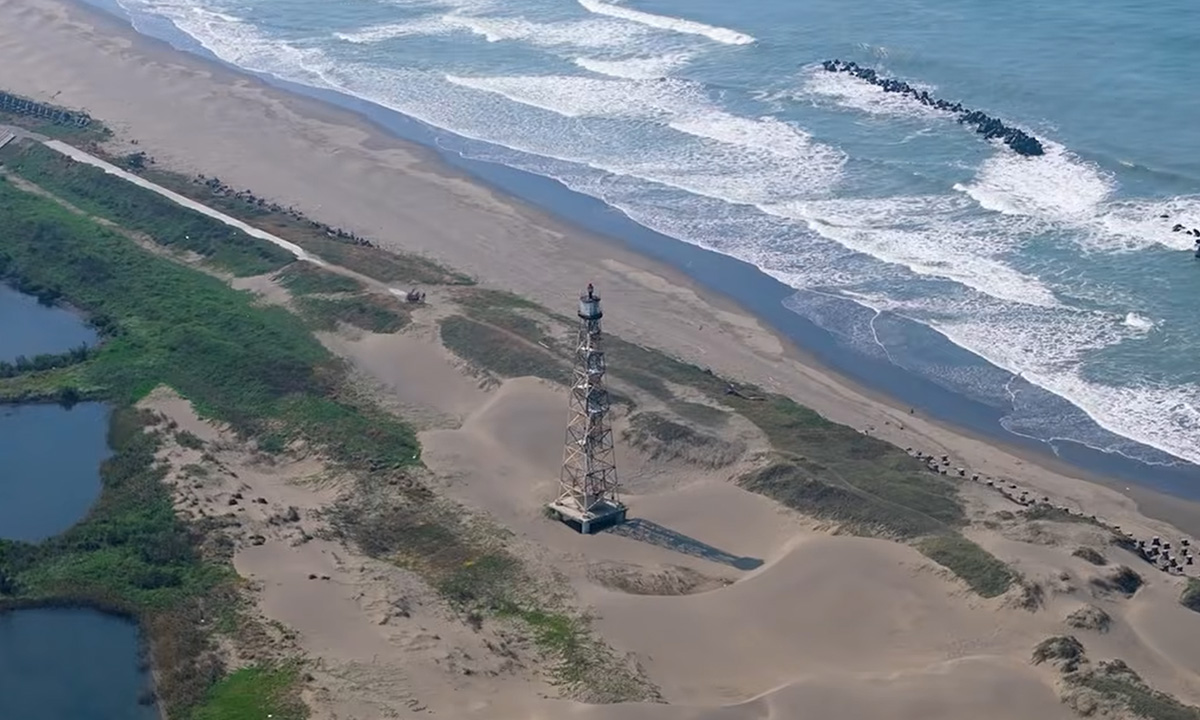
Guosheng Port Lighthouse, marking Taiwan's westernmost point on the Qigu Lagoon barrier islands, has been relocated and rebuilt three times due to the dynamic shifting of the sandbars.
Pin-han Pan, the Youth Category champion, shared that this experience shifted his creative focus from urban subjects to wetlands and fishing villages. Through this journey, he not only witnessed the wetlands and the daily lives of local fishermen, but also uncovered the multifaceted relationships between the fishermen and their industry, and in turn, between the industry and the wetlands. He realized that photography demanded far more than a keen eye for composition and light; it required a deep comprehension of the industrial and environmental contexts woven behind each image. Director Ke remarked that it was a rare privilege to work side-by-side with the younger generation. Seeing through their fresh perspectives, he added, revealed insights he had never previously considered, offering an entirely new and transformative field experience.
The Eco-Environmental Reporting Mission was far more than a lesson in photographic techniques; spanning from classroom seminars and hands-on field shoots to the final presentation of works, it offered a seamless, immersive journey of deep training that emphasized visual storytelling and a profound respect for ecology. Through the legacy and guidance of Director Ke, the initiative hoped to inspire more visual creators to look beyond mere aesthetics, urging them to embrace a deep understanding of the land and a steadfast sense of social responsibility.
Only when we understand will we care; only when we care will we act; and only when we act can all life hope to flourish. Through the National Geographic Taiwan Photo Contest, the initiative sought to inspire more photographers and visual enthusiasts to tell Taiwan’s local stories through their lenses, allowing images to become a powerful medium for dialogue and advocacy.
____
Eco-Environmental Reporting Mission Video: 2025 National Geographic Taiwan Photo Contest – Eco-Environmental Mission | YouTube
More Reports on Qigu Lagoon: